|
|
||
|
|
|
|
 |
|
|
 |
 |
 |
|
|
 |
 |
 |
|
|
 |
 |
 |
 |
|||
|
|
|||
|
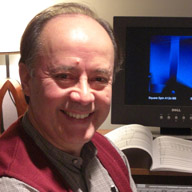
Milton Estévez majored in classical guitar and music theory (music degree in 1980, with honors) at the National Conservatory of Music (Quito). He received a degree in architecture from the Central University of Ecuador (first in his graduating class, 1978), and pursued studies in visual arts at the same institution. |
He specialized in composition, between 1980 and 1985, at the École Normale de Musique de Paris, with Max Deutsch and Yoshihisa Taïra, on a scholarship from the French government, and in 1984 received the superior diploma in advanced composition (first prize awarded in competition). |
Estévez also pursued graduate studies in
sociology, receiving a Ph.D. -Summa Cum Laudae from the Universitè de Paris
I, Panthéon-Sorbonne, in 1985;
and in musicology at the Universitè de Paris IV, Sorbonne (1982-84, Ph.D.
candidate). |
He studied orchestral conducting with André Girard (former conductor of the French Radio/TV and the Paris Opera orchestras); electro-acoustics and computer music at the Centre Européen pour la Recherche Musicale of Metz (CERM) with Mesías Maiguashca and François Pinot.
|
 |
|||
|
Upon returning to Ecuador in 1985, he rejoined the faculty of the National Conservatory of Music, where he had previously taught classical guitar and music theory from 1972 to 1980. He founded the Department of Research, Composition, and Musical Outreach (Departamento de Investigación, Creación y Difusión Musicales, DIC) in 1985, while teaching composition, musical analysis and orchestration. |
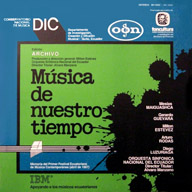
He also developed a research project on music of the Shuar culture from the Ecuadorean Amazon region, sponsored by UNESCO. In 1987 he founded the Ecuadorean Festival of Contemporary Music and subsequently directed its annual iterations, as well as the group Musicaviva and the series Música de Nuestro Tiempo, carrying out work in support of musical creation, research, and dissemination. Following an invitation to the SoundCelebration II festival, hosted by the Louisville Orchestra, Kentucky, in 1992, he moved to the USA in 1994, serving as a visiting composer-in-residence at the University of Louisville (1994-1997), and as composer-in-residence at Spalding University (1997-2002). |
From 1992, and through his stay in the USA, he continued working on his creative work, completing music commissions, and attending invitations to disseminate his music. From 2009 to 2017, he intermittently commuted between USA and Ecuador, serving as a consultant to the National Symphony Orchestra (2009 to 2010) and as an adviser to the Minister of Culture (2011 to 2013). In 2012, he was appointed head of the project for the creation of the National University of the Arts, approved by the National Assembly in 2013. Estévez also served as a consultant to the Ministry of Education of Ecuador for the improvement of artistic education (2014-2015). |
As a consultant to the OSNE and to the Ministry of Culture, he also designed the Ecuadorean Network of Symphonic Music, a very ambitious project of the Ministry of Culture, later updated as Sistema de las Músicas del Ecuador,SIME.
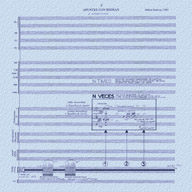
Among his works for orchestra and electro-acoustics is Apuntes con Refrán,
commissioned by IBM-Ecuador in 1987, which won an international competition
to participate in the SoundCelebration II festival, hosted by the Louisville
Orchestra (Kentucky) in 1992. He was invited the same year to the Sixth
Latin American Music Festival of Caracas, and later to its seventh iteration. |
|
|
|||
|
His work Guitarra...Guitarra... was awarded the First Mention in the Rodrigo Riera international competition for guitar composition, Caracas, 1997. |
Some other invitations to disseminate his music (symphonic, chamber, and mixed electro-acoustic works), include: Festival Internacional de Música Académica Contemporánea (International Festival of Contemprary Art Music, FIMAC, for its Spanish acronym), Cuenca, Ecuador, 2016 and 2017 iterations. Centro Mexicano para la Música y las Artes Sonoras (Mexican Center For Music And Sound Arts, CMMAS, for its Spanish acronym) , Parte de la Historia, Colección de música electroacústica latinoamericana (Compilation of Latin American Electro-acoustic Music), México (2014). Manuel Enríquez International Forum of New Music, Mexico DF (2012). |
Seventh, Eighth, Ninth, and Eleventh Ecuadorean Festival of Contemporary Music, Quito (2000, 2002, 2004, 2008, and 2011). Fifteenth Latin American Music Festival of Caracas (2008); Web-hosted audio-data-base of Latin American Electro-acoustic Music, Fondation Langlois, Montréal (2004).
DRAM, web-hosted Data Base of Recorded
American Music, New York (2003);
Jornadas de Música
Electroacústica, Montevideo (2000); Vor Eco Festival, Freiburg (1997); |
New Ensamble of Amsterdam (1996). Argentinean Music Council (1995); the Hungarian Radio (1994), Radio Cultura FM of Sao Paulo (1995). Composers Forum, Texas (1999); Florida Electro-acoustic Music Festival (1999); Subtropics Festival, Miami, (1994). Festival Synthèse, Bourges, (1994); International Rostrum of Composers, Paris, (1994).
|
|
|
|||